Best CRM for Sales Teams 2026
“The first rule of any technology used in a business is that automation applied to an efficient operation will magnify the efficiency. The second is that automation applied to an inefficient operation will magnify the inefficiency.” — Bill Gates

Introduction:
If you run a website, chances are you already have a blog. And if you don’t, maybe you should start one. A blog can boost your brand awareness, increase conversions, and improve customer service.
Blogs help you connect with your audience on a more personal level and allow them to interact with you in an individual capacity. Blogging also helps to present viewers with fresh content regularly.
Choosing the best CRM for sales teams in 2026 is no longer about finding a simple digital rolodex; it is about selecting a sophisticated engine that drives revenue through automation, artificial intelligence, and seamless integration. As the global CRM market is projected to reach approximately $126 billion by the end of 2026, with a compound annual growth rate (CAGR) of 12.4%, the stakes for choosing the right platform have never been higher. According to recent data from Fortune Business Insights, nearly 91% of companies with more than 10 employees now utilize a CRM to manage their sales pipeline, making the software a foundational requirement rather than a luxury.
For a modern sales team, the "best" CRM is defined by its ability to reduce administrative friction. Recent studies indicate that sales representatives spend roughly 40% of their time on manual data entry and administrative tasks. Platforms that successfully leverage AI and automation can improve response times by 30% to 50%, directly impacting the bottom line. This guide explores the leading contenders in the 2026 landscape, backed by market data and performance metrics.
The Evolution of Sales-First Architecture
Historically, CRM systems were designed for managers to track their employees. However, the shift in 2026 has moved toward "sales-first" architecture—tools designed to help the rep close deals faster. Industry leaders like Salesforce, HubSpot, and Pipedrive have pivoted their focus toward mobile accessibility and AI-driven forecasting. This is a critical move, considering that 65% of sales reps who use a mobile CRM achieve their sales quotas, compared to only 22% of those who do not, according to Innoppl Technologies.
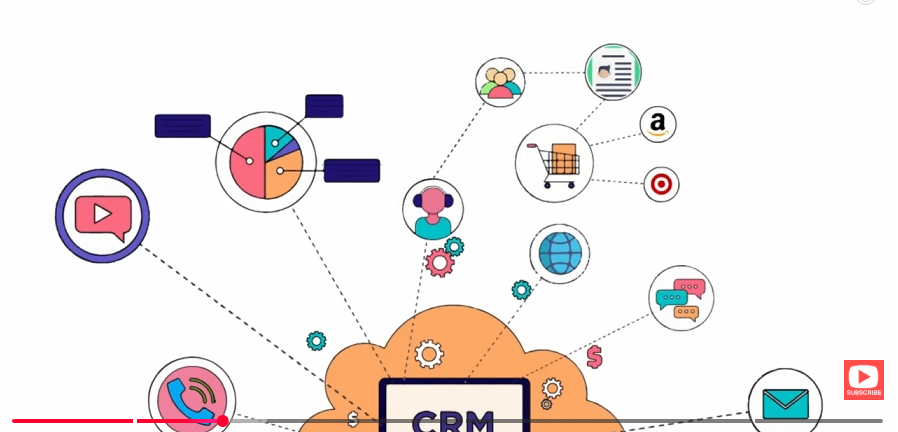
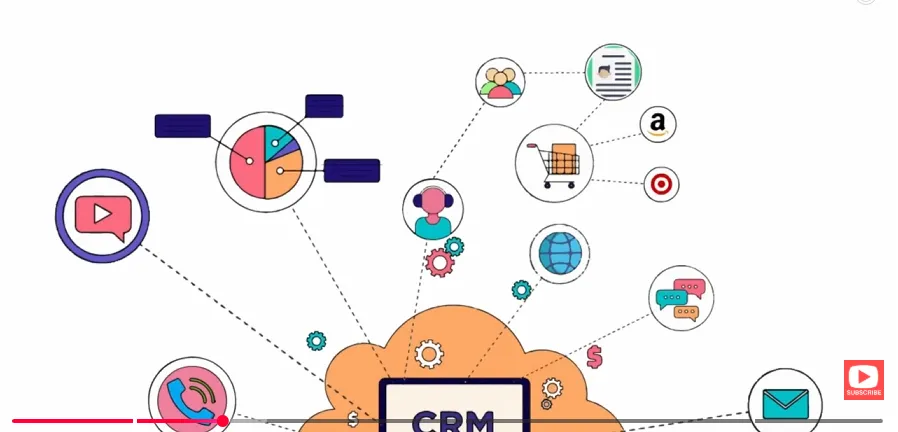
The modern sales stack now demands a 360-degree view of the customer. It is no longer enough to see a contact’s phone number; a rep needs to see their recent LinkedIn interactions, the marketing emails they opened, and the support tickets they filed. This level of integration is why the software segment of the CRM market captured over 63% of total revenue this year.
Salesforce: The Unrivaled Enterprise Standard
Salesforce continues to dominate the market, holding a 31% market share as of 2026. Its longevity is built on its immense capacity for customization through the Lightning platform and its industry-leading AI, Einstein. For large-scale sales teams, Salesforce is often the default choice because it can be molded to fit any complex sales cycle, no matter how non-linear.
The introduction of the Salesforce Starter Suite has also made the platform more accessible to smaller teams, offering a bridge for those who plan to scale. In 2026, the platform's focus has shifted heavily toward "embedded analytics." According to Salesforce’s own internal reporting, businesses that use their integrated analytics tools see a 25% higher deal win rate. The ability to forecast revenue with high precision allows sales leaders to allocate resources more effectively, turning raw data into a predictive roadmap.
HubSpot: The Leader in User Adoption and Alignment
If Salesforce is the powerhouse of customization, HubSpot is the champion of user experience. One of the biggest roadblocks to CRM success is user adoption; if the software is too difficult to use, the sales team simply won't use it. HubSpot addresses this by offering a "Smart CRM" that focuses on a clean, intuitive interface.
HubSpot’s true strength in 2026 lies in its ability to align sales and marketing teams perfectly. When both departments operate out of the same database, the "friction" of lead handoffs disappears. Data from DemandSage highlights that businesses using CRM to personalize their marketing and sales outreach see a 14% higher click-through rate on emails. HubSpot’s "All-in-One" approach ensures that when a sales rep picks up the phone, they have a full history of the prospect's engagement with the brand, from the first blog post they read to the last webinar they attended.
Pipedrive and Zoho: Specialized Solutions for Focused Teams
Not every sales team needs a platform that handles everything from customer support to website hosting. For teams that want to focus strictly on the "act of selling," Pipedrive remains a top contender. Built by salespeople for salespeople, it utilizes a visual pipeline interface that prioritizes activity-based selling. This methodology ensures that reps stay focused on the next actionable step—the call, the meeting, or the proposal—rather than getting lost in a sea of data.
On the other hand, Zoho CRM has become the "Editors' Choice" for 2026 due to its unbeatable value proposition. It offers features that rival Salesforce—such as the Zia AI assistant—at a fraction of the cost. Zoho is particularly favored by global teams because of its robust multi-currency support and deep customization options.
Key Factors Driving CRM ROI in 2026
When evaluating these platforms, it is important to look at the tangible Return on Investment (ROI). Research from Nucleus Research suggests that for every dollar spent on a CRM, the average return is $8.71. To achieve this, sales teams generally focus on five core metrics:
Conversion Rate Improvement: Top-tier CRMs are linked to a 300% increase in lead conversion rates through better follow-up automation.
Productivity Gains: Integration with tools like Slack and Google Workspace can boost overall team productivity by up to 34%.
Customer Lifetime Value (CLV): Organizations using advanced analytics in their CRM report a 23% higher CLV due to improved upsell opportunities.
Data Accuracy: Automated data capture reduces human error, which is critical since 32% of users cite technical expertise as their biggest roadblock.
Lead Response Time: AI-driven SDRs and automation allow teams to respond to new leads 35% faster than manual methods.
The Role of Artificial Intelligence in 2026
Artificial Intelligence is no longer a "future" feature; it is the heartbeat of the modern CRM. In 2026, 83% of companies are using AI within their CRM workflows to handle everything from lead scoring to automated email drafting. AI helps sales managers identify "at-risk" deals by analyzing communication patterns and historical data. If a prospect's response time slows down or their sentiment changes in an email, the CRM can flag the deal for immediate attention.
Furthermore, the rise of "Green Reporting" within CRMs is a new trend this year. Large enterprises are now using their CRM data to track the carbon footprint of their sales operations, from travel to digital storage, reflecting a broader corporate shift toward sustainability.
Choosing the Path Forward
Selecting the best CRM for your sales team requires a balance between feature depth and ease of use. While Salesforce offers unparalleled power for the enterprise, HubSpot provides a seamless bridge between departments, and Pipedrive offers the most focused experience for the individual rep. The data is clear: companies that lean into cloud-based, AI-enhanced CRM platforms are significantly outperforming their competitors in both revenue growth and customer satisfaction.
As you look to implement or upgrade your system, prioritize the mobile experience and the quality of the AI integrations. With the CRM market continuing its aggressive expansion, the right choice today will be the foundation of your sales success for the rest of the decade..
What is a CRM?